






Ping-Pong 3D - Simulation Game | Play Online for Free
Ping-Pong 3D is a realistic simulation training game where players practice continuous ball juggling.
Ping-Pong 3D Training Game: The Art of Juggling and Spin
Ping-Pong 3D is a realistic simulation training game where players practice continuous ball juggling. Control the racket's angle to impart 'ball-turning force' (spin) and maximize consecutive bounces against virtual gravity to achieve the highest score.
Step into the immersive environment of "Ping-Pong 3D", a training game designed to test and hone your virtual table tennis precision. This is more than a simple arcade diversion; it’s a physics-based simulation that focuses entirely on the demanding skill of "continuous ball juggling" using a modeled racket. Your goal is singular: keep the ball airborne and bouncing on the racket face for as long as possible, fighting against the relentless pull of gravity and the need for perfect timing.
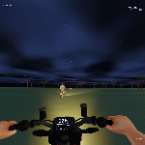
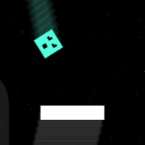
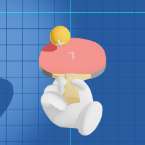
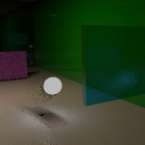
The main visual content of the page is a detailed 3D model of a ping-pong racket, realistically positioned as if held in the hand. The opposing element is the bright "ping-pong ball" itself, which is subjected to the simulated physics of the game world. Success is tied directly to how well you can manipulate the racket's orientation to control the ball's trajectory, just like a professional player in real life.
Mastering the Ball-Turning Force
The key mechanic in this simulation is the application of "ball-turning force", or spin. Unlike many simple physics games, the height and direction of the ball’s bounce are not determined merely by a fixed bounce coefficient. Instead, they vary dynamically with the magnitude of the force you exert through the racket's angle and movement:
- Racket Angle: By tilting the racket using your input device (such as the mouse or touch controls), you change the angle of impact. A slight forward tilt will send the ball forward; a slight backward tilt will help the ball gain height.
- Force Magnitude: The speed and intensity of your racket movements dictate the "magnitude of the force" applied. A quick, sharp upward motion generates a much higher bounce and imparts more top-spin than a slow, gentle tap.
- Spin Control: This allows you to perform realistic "ball-turning force" operations. You must use subtle wrist movements—simulated through your input—to correct the ball's drift and keep it centered on the sweet spot of the racket face.
Every successful bounce is a testament to your precision. The height and rebound velocity of the ping-pong ball are a direct reflection of your virtual 'swing' and the careful management of the racket’s orientation at the moment of contact.
The Consecutive Bounce Challenge
At the center of the 3D racket model, you will find the "consecutive bounce counter". This constantly updated number tracks your current streak of successful bounces. This score is the heart of the challenge, pushing you to maintain focus and execute perfect control for extended periods.
- Scoring: The number increases by one with every successful, controlled bounce on the racket surface.
- Game End Condition: The game continues until a single mistake is made. The simulation ends the moment the "ping pong ball is dropped" from the racket and hits the simulated floor (where the number of consecutive bounces effectively reaches zero).
- High Score: The challenge is to see how many balls you can "roll" (bounce) at a time, competing against your own best score and aiming for the pinnacle of precision control.
Come and try how many bounces you can achieve! This training game offers a simple concept with nearly endless complexity, providing a satisfying, skill-based challenge for fans of table tennis and physics puzzles alike.